Introduction
During the crypto boom, a small team of engineers built a Github-gated website to fund public goods through the use of an innovative funding mechanism called quadratic funding. From that experiment, a grants program was born; running quarterly rounds which consisted of four phases: project creation, grant application, donation, and distribution of funds.
While the Gitcoin Grants Program was built to empower communities to fund their public goods projects, that ability was hindered by significant user experience issues. The UX was designed so that each phase replaced the previous one as the round progressed—creating broken processes, missing status details, and massive usability issues leading to confusion, frustration, and high drop-off rates.
For a year, I led product design to build an entirely new web3 native user experience. I collaborated closely with engineering teams and project managers to rethink the end-to-end user journey and leverage a tech stack that would support an open-source interoperable protocol. My primary objective became investigating critical issues caused by organizational missteps, identifying user pain-points, and overall system inefficiencies.
Role
Lead Product Designer
Solutions
Web App & Design System
The Approach
I took a first-principles approach to understand why users engaged with the platform and how we could re-engineer a solution that was both decentralized and user-centric. During user discovery (via analytics and interviews) we found a stark line between project owner, operator, and donor personas; in terms of expectations, needs, and behaviors. The team then set high-level metrics for success: shortening time on tasks (e.g. connecting a wallet, switching networks, and finding documentation), increasing phase-completion rates (e.g. create a project, apply for a grant, and receive funds), improving trust, increasing user satisfaction, and increasing donation conversions.
I then conducted a full UI audit, competitor analysis, and interviewed stakeholders across various continents to define common cross-cultural themes. As we continued to gather data on user interaction we identified common drop-off points, consistent paths taken, and highly engaging events. The cross-analysis of both qualitative and quantitative data revealed insights in user behavior and opportunities that were pivotal in reframing the initial thesis.
I led various white-boarding activities to align our product experts with stakeholder expectations, understand tech constraints, and define our go-to-market strategy. I also led design thinking sessions quarterly to revisit assumptions and reconcile previous research data to inform future strategy.

The Solution
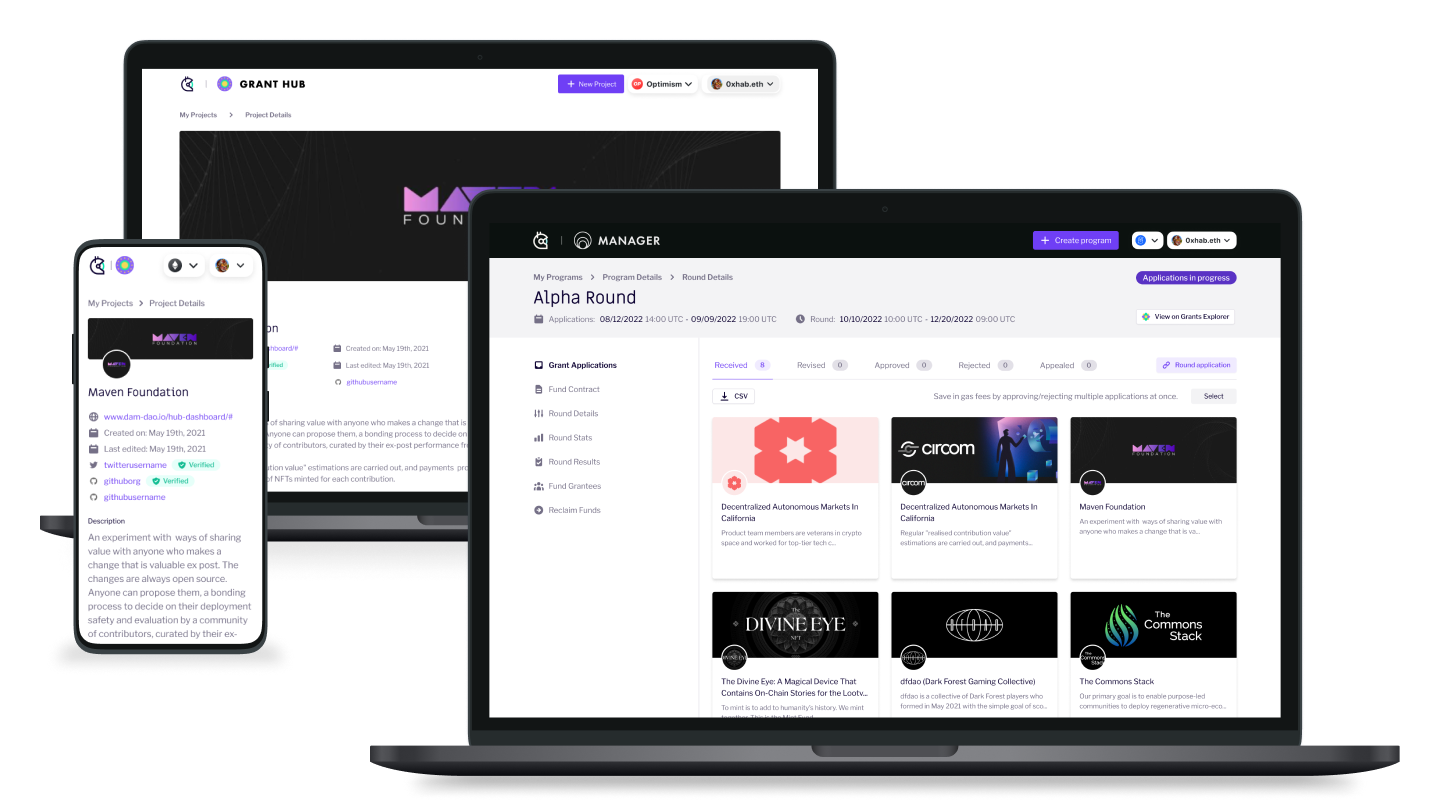
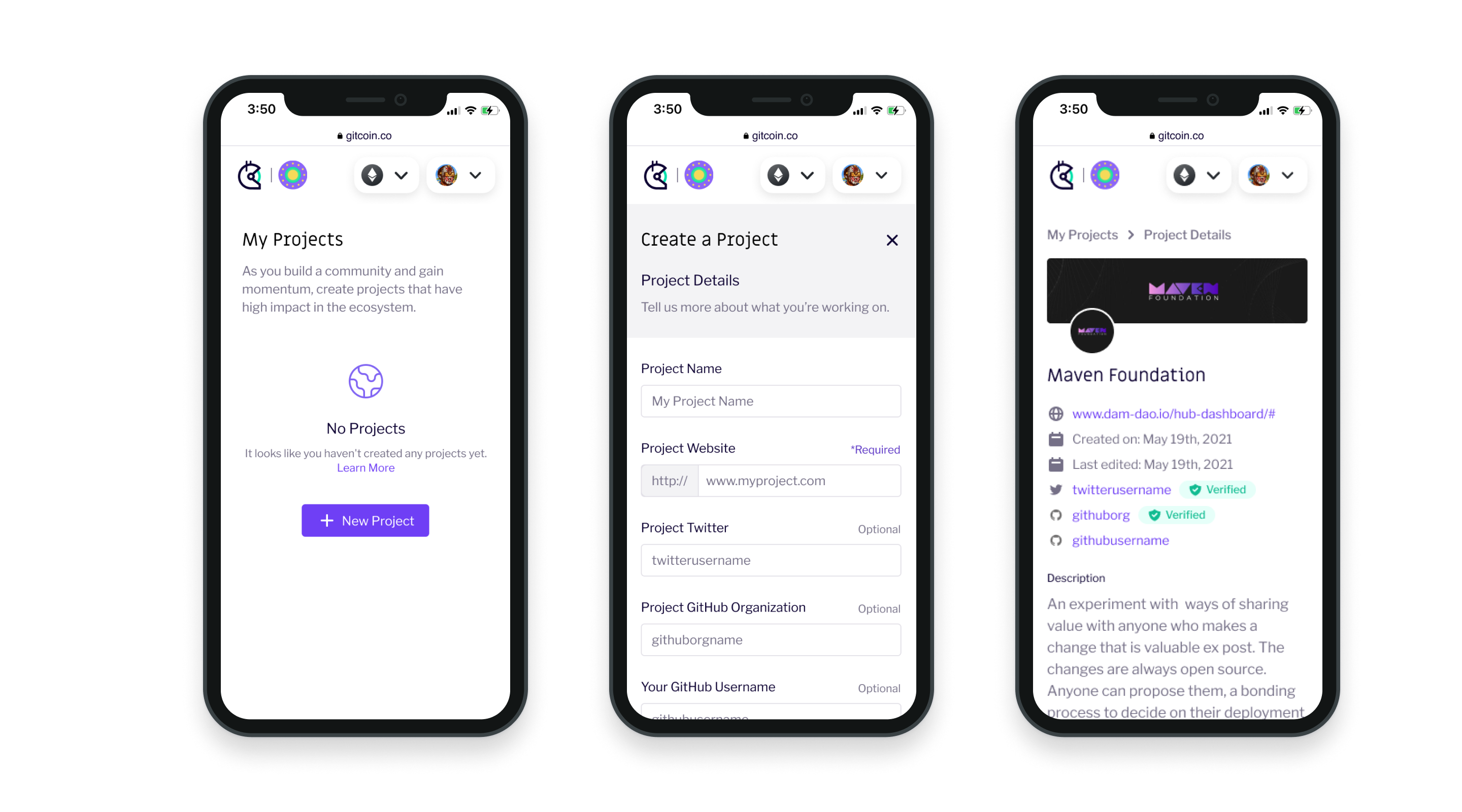
The Project Builder allowed project owners to create multiple projects, build reputation, apply to grants across multiple chains, see countdowns for grant phases, added clarity regarding project efficacy, and follow-through via notifications, The Grant Manager gave grant round operators the ability to run multiple rounds with different donation models, provided round analysis, stats, social channels sharing, and on-chain distribution of funds. To move fast, we leveraged Tailwind UI as a design system and adjusted the CSS to match our existing brand guidelines.
By the launch of the decentralized "Alpha" pilot grant round, our team had achieved a 94% passing score in the system usability scale, aligning usability heuristics and user expectations to system outcomes. The 6% margin of error was regarding external factors like wallet UX and third-party providers (Mainnet, Ceramic, and IPFS), which were added to the roadmap.
With the release of the Grant Manager, we opened up a realm of possibilities for native and non web3 native organizations to create and run grant programs on-chain. The MVP was made to run a single round and funding mechanism (quadratic funding), but designed to scale and allow a diverse set of round parameters, project acceptance criteria, industry categories, chain options, and funding mechanisms. The modularity baked into the UI, strengthened usability, increased trust, and unified the product suite for the launch of a glorious Gitcoin 2.0.
The Lessons
The redesign significantly improved user engagement and donation conversions. Post-launch, Gitcoin partnered with major organizations like The American Cancer Association, UNICEF, and CoinBase—further solidifying its impact on funding public goods. The modular design of Project Builder and Grant Manager allowed Gitcoin to efficiently scale its operations, accommodating a growing user base and diverse funding mechanisms without sacrificing user experience.
If I could do it all over again, I would do a deeper dive into web3 communities. As it stands, web3 is incredibly community focused, so taking a traditional user-based approach to the research felt too narrow and often generated outlier data-points difficult to reason with. Targeting communities (as users) could have added a deeper dimension to our personas giving us a stronger chance at asking better questions and framing better opportunities.